A Night on Patrol
Una Noche de Patrullaje
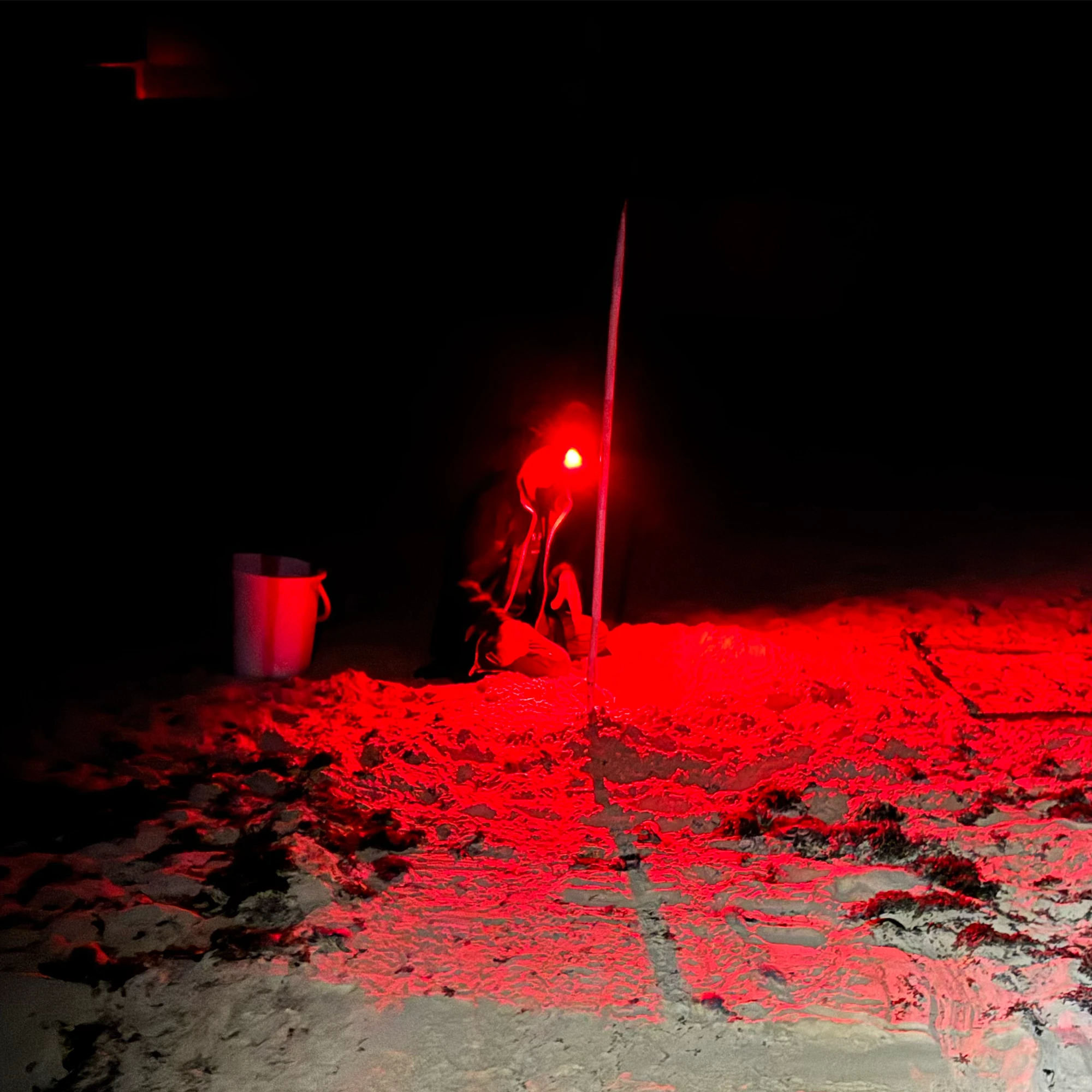
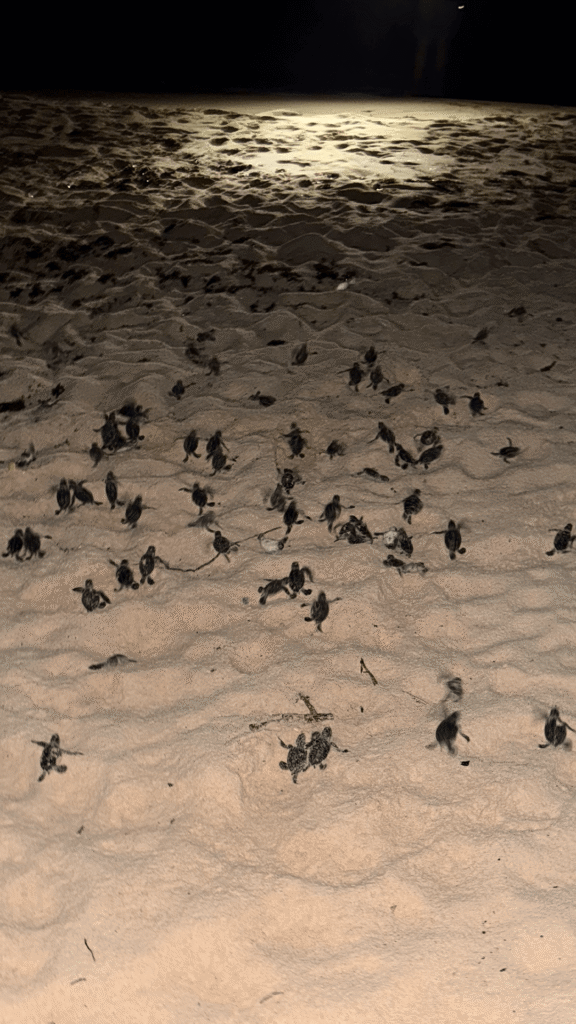
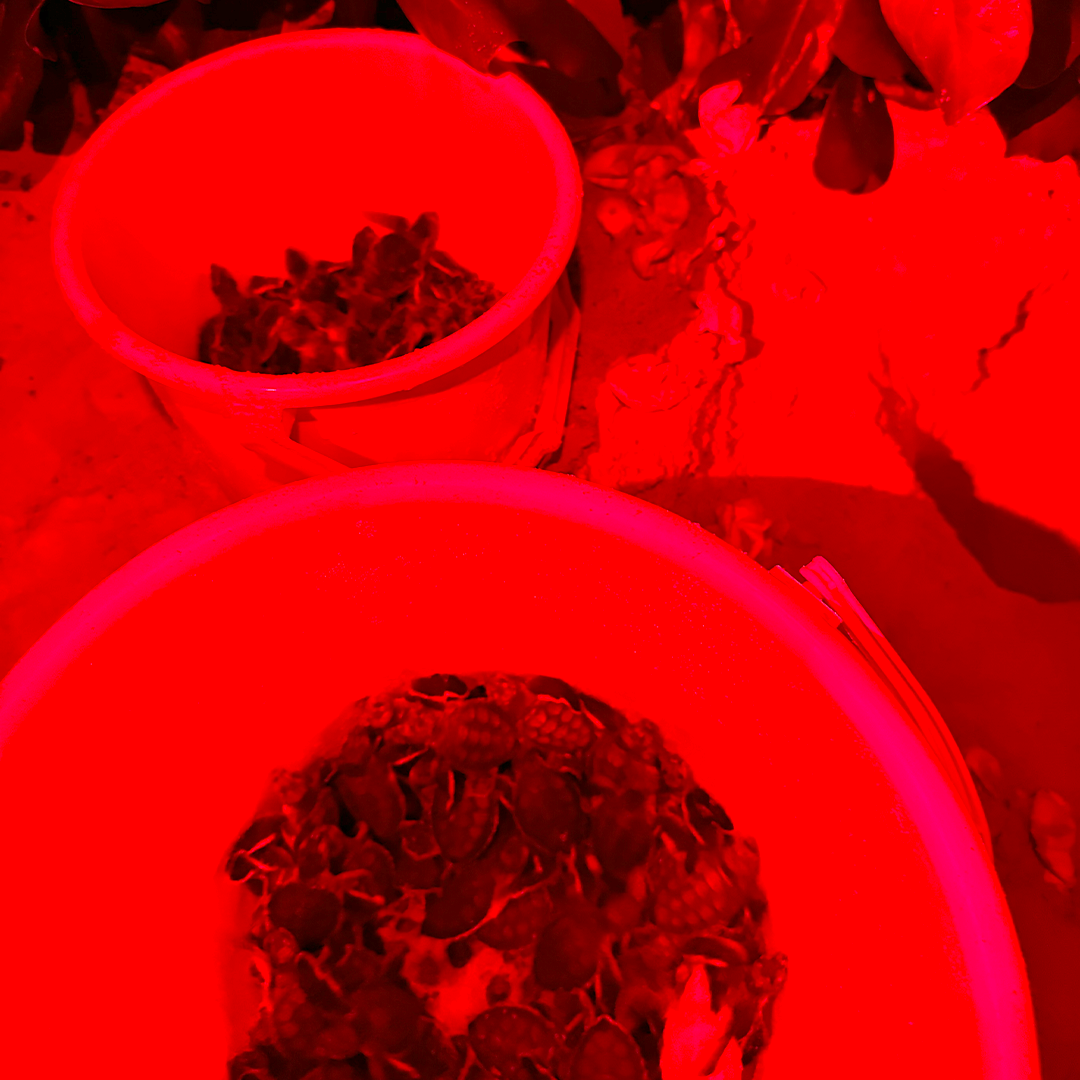
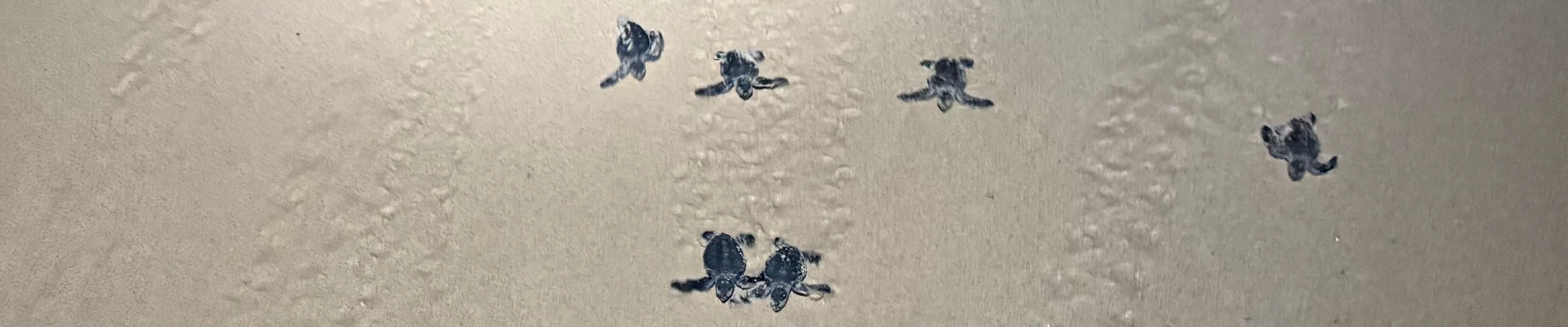
It’s almost 9 PM when our headlamps click off—red light only from here on, to keep from disorienting anything crawling out of the surf. The patrol team walks the beach in pairs, scanning the sand for fresh tracks: two parallel drag marks and a body pit mean someone nested here in the last few hours.
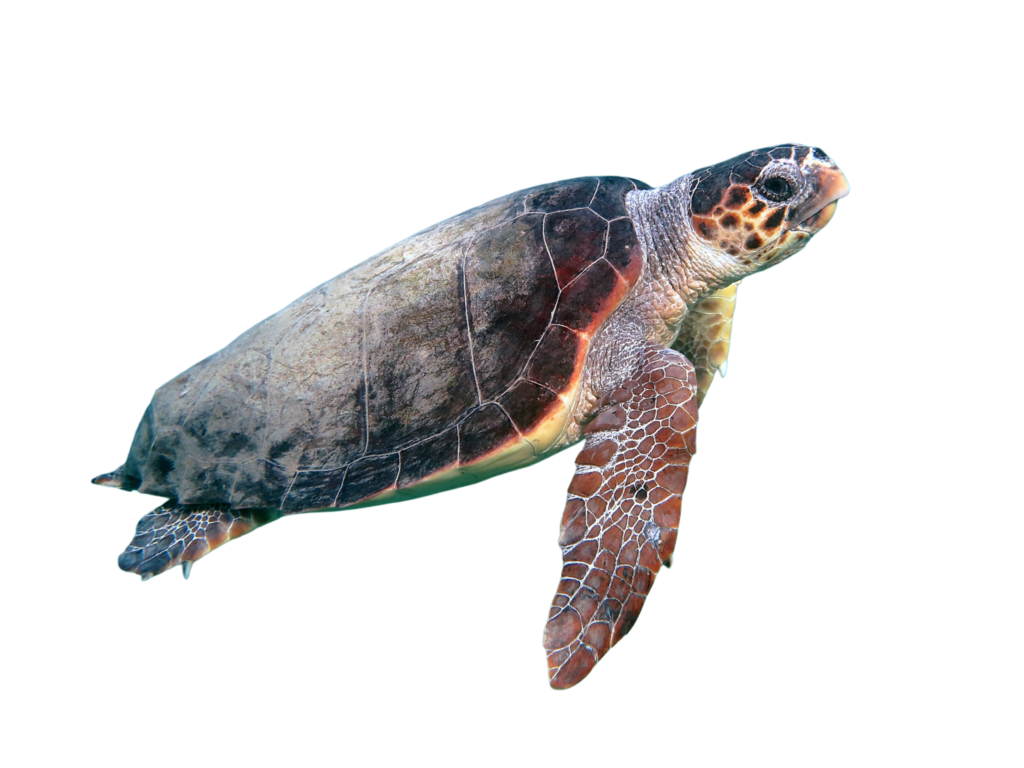
Tonight we find tracks near Zone 3, still soft at the edges. We follow them up past the tideline to a shallow depression, and there she is—a loggerhead, mid-nest, her back flippers working steadily to dig the egg chamber. We keep our distance and wait.
Forty minutes later she begins covering the nest, throwing sand in wide arcs to disguise the exact spot from predators. Once she returns to the sea, our team moves in: GPS coordinates, species ID, a photo of the track pattern, and—carefully—an egg count as we relocate the clutch to a protected section of beach, away from erosion and foot traffic.
By the time we log the data it’s past midnight. Ninety-four eggs, safely reburied, due to hatch in about seven weeks. Every nest like this one gets a number, a date, and a small flag in the sand. It’s slow, quiet work—but it’s the whole reason SAVE exists.
Son casi las 9 de la noche cuando apagamos las linternas—de aquí en adelante solo luz roja, para no desorientar a lo que salga del oleaje. El equipo de patrullaje camina la playa en parejas, buscando rastros frescos: dos líneas paralelas de arrastre y un pozo corporal significan que alguien anidó aquí hace pocas horas.
Esta noche encontramos huellas cerca de la Zona 3, todavía suaves en los bordes. Las seguimos más allá de la línea de marea hasta una depresión poco profunda, y ahí está—una caguama, a mitad de la anidación, con las aletas traseras trabajando sin parar para cavar la cámara de huevos. Guardamos distancia y esperamos.
Cuarenta minutos después empieza a cubrir el nido, lanzando arena en arcos amplios para disimular el lugar exacto ante los depredadores. En cuanto regresa al mar, entra nuestro equipo: coordenadas GPS, identificación de especie, una foto del patrón de huellas y—con mucho cuidado—un conteo de huevos mientras reubicamos la nidada a una zona protegida de la playa, lejos de la erosión y el paso de gente.
Cuando registramos los datos ya pasa la medianoche. Noventa y cuatro huevos, reenterrados a salvo, con eclosión estimada en unas siete semanas. Cada nido como este recibe un número, una fecha y una pequeña bandera en la arena. Es trabajo lento y silencioso—pero es la razón de ser de SAVE.