From Nest to Sea: 45 Days in the Life of a Hatchling
Del Nido al Mar

Inside a nest buried about 45 cm under the sand, a clutch of turtle eggs spends roughly seven to eight weeks developing before anything happens on the surface. The temperature of that sand does more than keep the eggs warm—it determines the sex of the hatchlings. Warmer sand produces more females; cooler sand produces more males. It’s one of the many reasons shade, sand composition, and nest placement matter so much to our monitoring work.
When the hatchlings are ready, they don’t emerge one at a time. The whole clutch breaks out of its shell within a day or two of each other, then works together—clawing, pushing, climbing over one another—to dig upward as a group. It can take several days of collective effort to reach the surface.
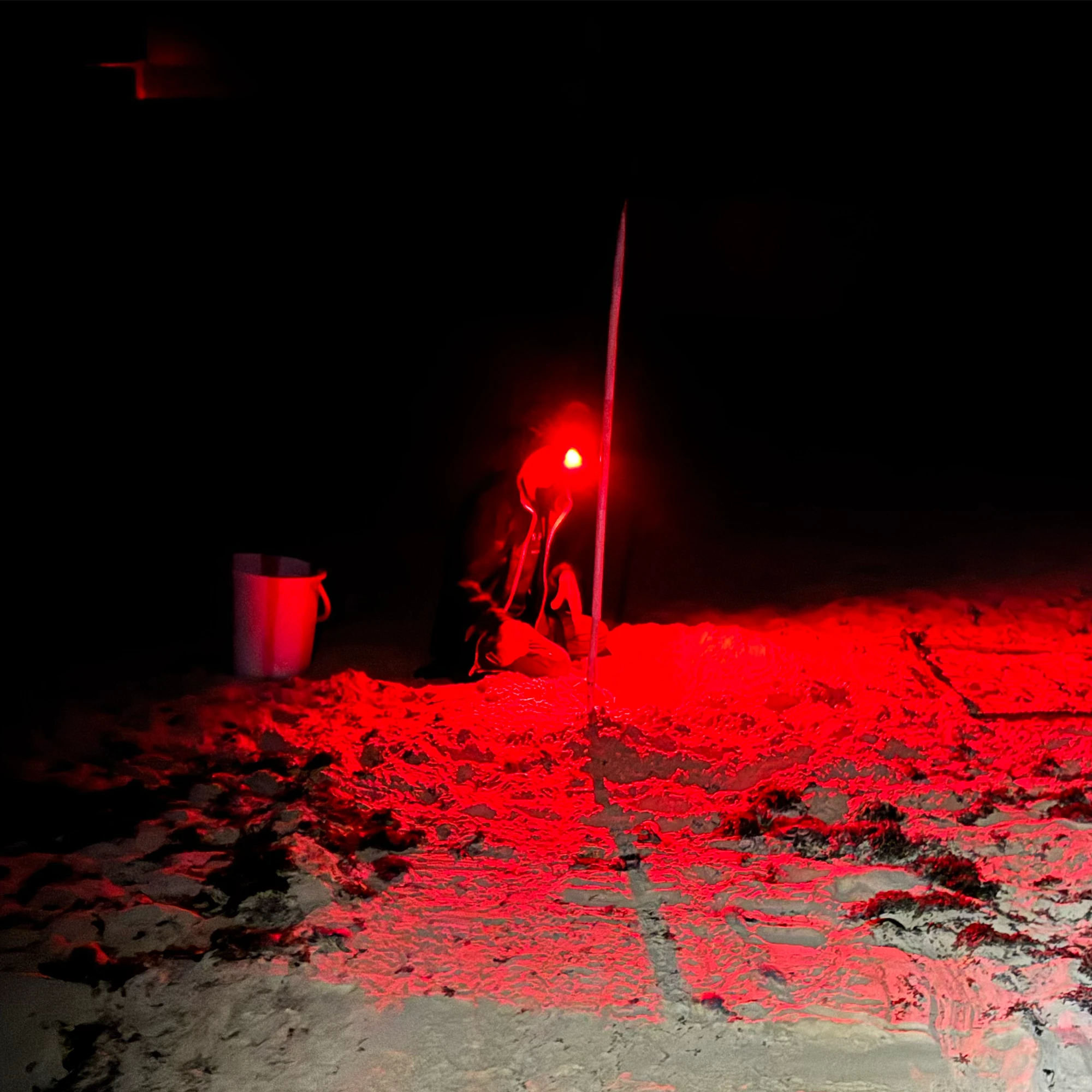
Emergence almost always happens at night, when sand temperatures drop and predators are less active. The hatchlings orient themselves toward the brightest, lowest horizon—historically the open sky reflecting off the ocean—which is why artificial light from beachfront buildings is so dangerous: it can pull them the wrong way, inland, where they exhaust themselves and rarely survive.
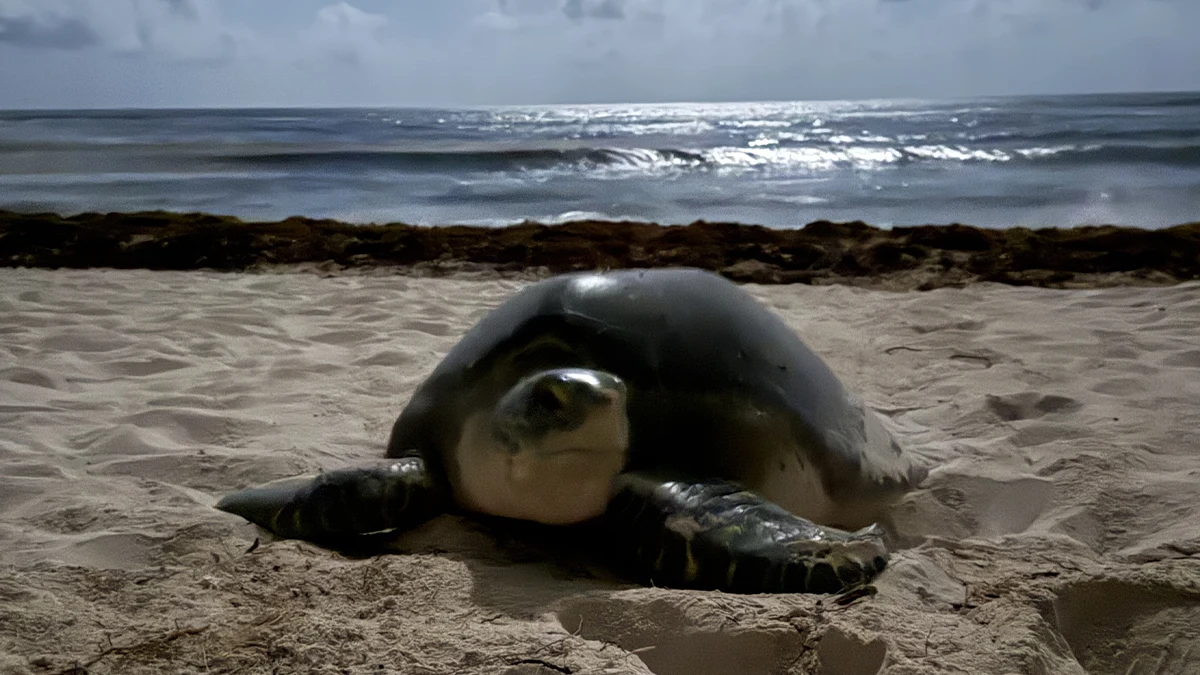
Once they reach the water, the hatchlings swim almost continuously for 24 to 48 hours straight, driving themselves offshore, away from the predator-dense shallows, and into the current systems that will carry them through what researchers call the “lost years.” Of the roughly 100 eggs in an average nest, only a tiny fraction will survive to adulthood. That’s exactly why every nest we protect matters.
Dentro de un nido enterrado a unos 45 cm bajo la arena, una nidada de huevos de tortuga pasa entre siete y ocho semanas desarrollándose antes de que ocurra algo visible en la superficie. La temperatura de esa arena hace más que mantener calientes los huevos—determina el sexo de las crías. La arena más cálida produce más hembras; la arena más fresca produce más machos. Es una de las muchas razones por las que la sombra, la composición de la arena y la ubicación del nido importan tanto en nuestro trabajo de monitoreo.
Cuando las crías están listas, no emergen una por una. Toda la nidada rompe el cascarón dentro de un margen de uno o dos días, y luego trabajan juntas—rasguñando, empujando, trepando unas sobre otras—para cavar hacia arriba como grupo. Puede tomar varios días de esfuerzo colectivo llegar a la superficie.
La emersión casi siempre ocurre de noche, cuando baja la temperatura de la arena y hay menos depredadores activos. Las crías se orientan hacia el horizonte más brillante y bajo—que históricamente era el cielo abierto reflejándose en el mar—por eso la luz artificial de las construcciones frente a la playa es tan peligrosa: puede desviarlas tierra adentro, donde se agotan y rara vez sobreviven.
Al llegar al agua, las crías nadan casi sin parar durante 24 a 48 horas, alejándose de la costa y de las aguas someras llenas de depredadores, hacia los sistemas de corrientes que las llevarán por lo que los investigadores llaman los “años perdidos”. De los cerca de 100 huevos de un nido promedio, solo una fracción mínima llegará a la adultez. Por eso cada nido que protegemos importa.